

Makhana, scientifically known as Euryale ferox, is an aquatic crop grown mainly in shallow ponds, lakes, and wetlands. The edible part of the plant is its seed. After roasting or processing, the seed is popped and consumed as a fox nut. India is the world’s largest producer of makhana. This position is supported by suitable agro-climatic conditions and long-standing cultivation practices, mainly in Bihar, West Bengal, and Assam.
Over the years, makhana has evolved from a traditional food of Bihar into a widely consumed health food across the country. This transformation has been driven by rising health awareness and supportive government policies. In line with the sector’s growing importance, the Government announced the establishment of the National Makhana Board in the Union Budget 2025-26. The Board was formally launched in Bihar on 15 September 2025. This initiative marks a significant step towards strengthening and modernizing the makhana value chain.
To further support the sector, the Government has approved a Central Sector Scheme for the Development of Makhana with a total outlay of ₹476.03 crore for the period from 2025-26 to 2030-31.
The scheme focuses on promoting research and innovation, improving the availability of quality seeds, and strengthening farmers’ skills. It also aims to upgrade harvesting and post-harvest practices, promote value addition, branding, and marketing, enhance exports, and reinforce quality control systems. Under the Central Sector Scheme for the Development of Makhana, ₹30 Crore was approved for 2025-26 and ₹90 Crore for 2026-27.

India’s Makhana Boom
India continues to be the clear global leader in makhana production. Bihar accounts for nearly three-fourths of India’s Makhana production and contributes around 80-85% of the global supply. Makhana cultivation is mainly concentrated in North Bihar.
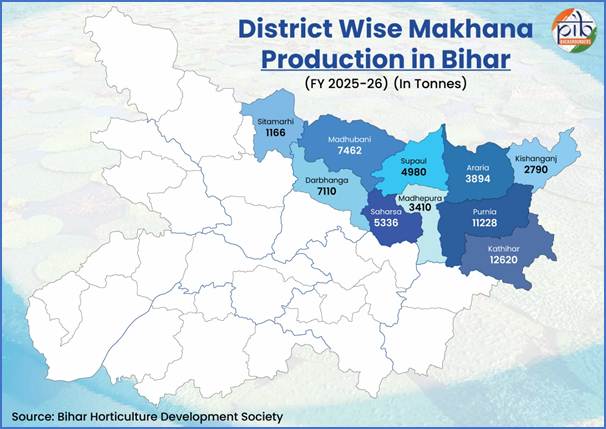
It is especially prominent in the Kosi basin districts of Supaul, Saharsa, and Madhepura, as well as in nearby areas of the Mithila and Seemanchal regions. This makes the state the central hub of the makhana sector.
In 2024-25, as per final estimate of Horticulture Statistics Unit, DA&FW, the total production of makhana in India was 63,910 Metric Tonnes (MT), with an average productivity of 2.03 MT per hectare. As per the Second Advance Estimates (2025–26), total production of makhana in India is 80,590 MT, with an average productivity of 2.34 MT per hectare. Bihar is the leading producer of makhana in the country, with a production of 60,000 MT in 2025–26 and average productivity of 2.00 MT per hectare.
Traditionally grown in ponds, modern techniques like field-system farming and improved varieties such as Swarna Vaidehi and Sabour Makhana-1 have helped increase productivity. The growth has been driven by an increase in cultivated area, improved productivity, and reduced cultivation risks.
Domestic Production and Consumption Dynamics in Makhana Market
India produces more than 0.6 lakh metric tonnes of makhana each year. About 40 percent, or nearly 0.23-0.25 lakh metric tonnes, is exported, while the remaining quantity is consumed domestically. With growing global demand for clean-label and plant-based superfoods, India’s strong production base places makhana as a premium snack in international markets.
The domestic makhana market recorded annual growth of 17-18 percent between 2021-22 and 2024-25. This growth has been driven by rising health awareness, premiumization, and the expansion of branded players. Strong domestic demand has also helped shield the sector from fluctuations in export markets.
The market is expected to reach ₹11,000-12,000 crore by 2029-30. Production volumes increased by only 4 to 5 percent during the period from FY 2022 to 2025. Average prices increased from about ₹500 per kilogram during 2020-2022 to nearly ₹1,250 per kilogram in 2025. This increase is linked to higher demand for health-focused snacks, premium branding, and limited supply response.

The Science Behind the Crunch: Makhana’s Nutritional Edge
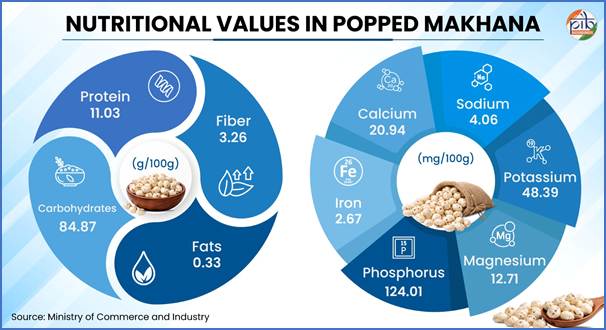
Makhana is nutrient-rich, containing carbohydrates, high-quality protein, dietary fibre, and essential micronutrients such as magnesium, potassium, phosphorus, and iron. Its low-sodium and cholesterol-free composition makes it suitable for a wide range of dietary needs.
Makhana is valued for its nutritional and health benefits and is increasingly recognized as a global superfood. It has a low glycaemic load, making it suitable for people managing diabetes. It also supports heart health, aids digestion, and is known for its anti-aging properties. Studies indicate that makhana’s nutrient profile is superior to that of many commonly consumed nuts such as almonds, walnuts, and cashews.
It contains very little fat (0.33 g per 100 g), is rich in fibre, provides various essential amino acids and has about 95 percent protein digestibility. Its essential amino acid index and chemical score are comparable to those of fish.
Making of the Superfood: From Seed to Snack
Makhana production involves several stages that together form the value chain. Harvesting and seed collection take place at the farm level. Cleaning and drying are part of primary processing. Activities such as roasting or popping, grading, polishing, and packaging fall under secondary processing and value addition.
Farm-Level Production
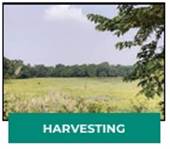
Farm-level production includes pond preparation, seed broadcasting, crop management, and manual harvesting from water bodies. This stage is highly labor-intensive and depends on skilled manual work. Seed collection is particularly demanding as it is carried out underwater. Traditional cultivation practices continue to dominate the sector, and the level of mechanization remains limited.
Primary Processing
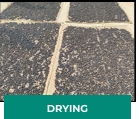
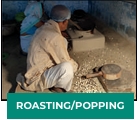
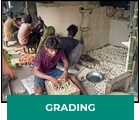
Primary processing of makhana is mostly carried out at the household or village level using traditional tools and methods. The process begins with drying and cleaning the raw seeds, followed by high-temperature roasting. The heated seeds are then popped, expanding into the light, crunchy form commonly consumed as a snack. After popping, the makhana is polished, sorted, and graded according to size and quality. Larger, higher-quality makhana fetch higher prices in the market.

Secondary Processing and Value Addition
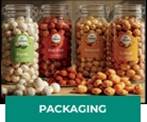
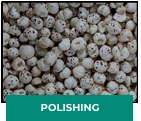
The final product, which is popped makhana, is polished and packed. In recent years, secondary processing has expanded beyond traditional forms. It now includes flavoured makhana, ready-to-eat snacks, makhana flour, and other products. This segment offers strong potential for value addition and employment generation.
National Research Centre for Makhana (NRCM)
The National Research Centre for Makhana (NRCM) plays a key role in modernizing India’s makhana sector through research and capacity building. It also promotes improved cultivation and processing practices across the sector. NRCM has developed high-yield makhana and thornless water chestnut varieties, introducing water-efficient and integrated farming systems, and launching Makhana-cum-fish farming. Over the years, NRCM has distributed 15,824.1 kg of high-yielding makhana seeds to farmers, Krishi Vigyan Kendras, and various organizations.
Additionally, NRCM has developed several pieces of equipment and machinery for makhana popping and the production of value-added products. These technologies have been licensed to manufacturers for commercialization. Examples include the makhana seed washer, seed grader, primary roasting machine, popping machine, and popped makhana grader. Technologies for producing various value-added products have also been transferred for commercial use.
Infographics Based on India’s Makhana Sector

Answer Writing Question: NABARD Grade A: Makhana has emerged as an important high-value agricultural commodity with significant potential for rural income generation, value addition and exports. Discuss the major challenges in the makhana value chain and suggest measures to strengthen its production, processing and export competitiveness. (15 Marks | 600 Words)
Makhana, scientifically known as Euryale ferox, is an aquatic crop cultivated mainly in shallow ponds, lakes and wetlands. India is the world’s largest producer, with Bihar contributing nearly three-fourths of India’s production and around 80–85% of global supply. India’s makhana production increased from 63,910 MT in 2024-25 to 80,590 MT in 2025-26 as per the Second Advance Estimates. Recognising its growing importance, the Government announced the National Makhana Board in Union Budget 2025-26, which was formally launched in Bihar on 15 September 2025.
A. Significance of Makhana Sector
I. Enhancing farmer incomes: Makhana has emerged as a high-value agricultural commodity with rising demand and prices. Its expanding domestic and international markets provide opportunities for farmers to increase income, particularly in North Bihar, where cultivation is concentrated. The domestic makhana market grew by 17–18% annually between 2021-22 and 2024-25.
II. Rural employment and livelihood generation: The crop supports employment across cultivation, harvesting, processing, grading, packaging and marketing. Its labour-intensive production also creates livelihood opportunities in rural areas. Further development of processing and value-added products can generate additional rural employment.
III. Nutritional and health significance: Makhana is rich in carbohydrates, protein, dietary fibre and micronutrients such as magnesium, potassium, phosphorus and iron. It is also low in fat, low in sodium and cholesterol-free, increasing its relevance amid growing demand for healthy and plant-based foods.
IV. Export and agri-food potential: India exported 7,264.89 MT of makhana products in 2025-26, valued at ₹19,296.08 lakh. Rising global demand for clean-label and premium foods provides significant scope for India to expand its agri-food exports.
V. Regional and value-chain development: Makhana is an important economic activity in North Bihar, particularly the Kosi basin, Mithila and Seemanchal regions. Development of processing, branding and value addition can help retain a greater share of value within rural areas and promote local agro-industries.
B. Major Challenges in the Makhana Value Chain
I. Labour-intensive cultivation and limited mechanisation: Pond preparation, seed broadcasting, crop management and manual harvesting require substantial skilled labour. Seed collection is particularly difficult as it is carried out underwater. Traditional cultivation practices continue to dominate.
II. Traditional processing infrastructure: Processing is largely undertaken at household or village level using traditional tools. Drying, cleaning, roasting, popping, grading and polishing therefore remain labour-intensive and can constrain efficiency and standardisation.
III. Limited value addition: Although products such as flavoured makhana, ready-to-eat snacks and makhana flour are emerging, greater processing and branding are required to capture higher value and create employment.
IV. Concentrated export markets: The US, Canada and UAE account for 77% of total makhana exports. These markets have relatively lower unit prices compared with premium markets such as Germany, Nepal and Australia, creating a need for export diversification.
V. Gaps in skills, technology and quality systems: Farmers and enterprises require greater access to improved seeds, scientific cultivation, processing technology, grading, packaging, branding and quality-control practices to make the value chain globally competitive.
C. Measures to Strengthen the Makhana Sector
I. Promote scientific cultivation and mechanisation: The adoption of improved varieties such as Swarna Vaidehi and Sabour Makhana-1, field-system farming and water-efficient technologies should be expanded. Mechanisation of harvesting and processing can reduce labour dependence and improve productivity.
II. Effectively implement the Central Sector Scheme: The Central Sector Scheme for Development of Makhana has an outlay of ₹476.03 crore for 2025-26 to 2030-31. It focuses on research and innovation, quality seeds, farmer skills, harvesting and post-harvest practices, value addition, branding, exports and quality control.
III. Strengthen FPOs and farmer capacity: FPOs should be promoted for aggregation, collective marketing, processing and branding. Training, demonstrations and exposure visits should be expanded. Under the scheme, 8,159 farmers benefited during 2025-26, while 1,010 hectares were brought under makhana cultivation and 73 hectares under seed production.
IV. Promote technology and value addition: The National Research Centre for Makhana (NRCM) should be leveraged for technology transfer, extension and commercialisation. Its technologies include seed washers, graders, roasting machines and popping machines. Greater support should be provided for flavoured makhana, ready-to-eat products, makhana flour and other processed products.
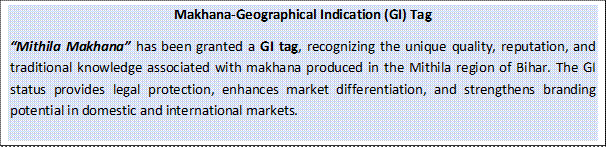
V. Diversify exports and build a global brand: India should target premium-paying markets while improving quality certification, packaging, traceability and branding. The “Mithila Makhana” GI tag can be strategically used to create a distinct geographical identity. The separate HSN code introduced for makhana products in 2025 can also improve export monitoring and policy formulation.
In conclusion, makhana represents a strong opportunity to connect traditional agricultural knowledge with modern technology, value addition and global markets. A coordinated approach involving the National Makhana Board, NRCM, FPOs, research institutions and private enterprises can improve productivity, strengthen the value chain and enhance export competitiveness. This can transform makhana from a traditional regional crop into a globally competitive agri-food product while supporting higher farmer incomes, rural employment and agricultural exports.
Objective Practice Questions: NABARD Grade A Exam
Q1. Consider the following statements regarding makhana production estimates in India:
I. Between the final estimate for 2024-25 and the Second Advance Estimates for 2025-26, India's total makhana production increased by more than 25 percent.
II. The national average productivity of makhana in 2025-26 is higher than Bihar's own average productivity in the same year.
III. As per the Second Advance Estimates for 2025-26, Bihar's share in India's total makhana production exceeds 80 percent.
Which of the statements given above is/are correct?
A) I only
B) I and III only
C) I and II only
D) II and III only
E) I, II and III
Correct Answer: C
Explanation:
Statement I is correct. Production rose from 63,910 MT (2024-25 final estimate, Horticulture Statistics Unit, DA&FW) to 80,590 MT (2025-26 Second Advance Estimates), an increase of 16,680 MT, which works out to roughly 26 percent, hence more than 25 percent.
Statement II is correct. National average productivity in 2025-26 is 2.34 MT per hectare, whereas Bihar's average productivity in the same year is 2.00 MT per hectare. This is an important analytical point: Bihar dominates in volume but not in yield, indicating that field-system farming and improved varieties have raised yields faster in newer growing pockets.
Statement III is incorrect. Bihar produced 60,000 MT out of 80,590 MT, which is approximately 74 percent, that is nearly three-fourths and not above 80 percent. The 80-85 percent figure refers to Bihar's share in global supply, not in India's production. Confusing these two figures is the classic trap in this data set.
Options A, B, D and E fail because they either drop a correct statement or admit the misread 80 percent claim.
Q2. With reference to India's makhana export markets, which one of the following statements is not correct?
A) The United States, Canada and the United Arab Emirates together account for about 77 percent of India's makhana exports.
B) Among the high-volume destinations, the UAE records the lowest average unit price realization.
C) The United Kingdom presents a balanced profile, combining a 10 percent market share with an average realization of about 20 US dollars per kilogram.
D) Germany, Nepal and Australia command premium unit prices while individually accounting for only 1 to 5 percent of export volumes.
E) Within the high-volume markets, the average unit price realization declines as the market share of the destination rises.
Correct Answer: E
Explanation:
Option E is the incorrect statement and is therefore the answer. Within the high-volume group, the United States has both the largest share (40 percent) and the highest unit price among the three (19.5 dollars per kg), while the UAE has the smallest share of the three (17 percent) and the lowest price (13.3 dollars per kg). The relationship therefore runs in the opposite direction to what the option claims. The correct inference is that high-volume destinations as a group realize lower prices than small premium markets, not that price falls as share rises within the group.
Option A is correct: 40 plus 20 plus 17 equals 77 percent, showing high export concentration.
Option B is correct: the UAE at 13.3 dollars per kg is the lowest among the US, Canada and UAE.
Option C is correct: the UK is described as balanced with a 10 percent share and 20 dollars per kg realization.
Option D is correct: Germany (26.0 dollars per kg), Nepal (21.6) and Australia (21.0) fetch premium prices at 1 to 5 percent volumes, which is precisely why diversification beyond the US and Gulf markets is recommended.
Q3. Consider the following statements about institutional and financial support to the makhana sector:
I. The National Makhana Board was announced in the Union Budget 2025-26 and was formally launched in Bihar in September 2025.
II. The Central Sector Scheme for the Development of Makhana carries a total outlay of ₹476.03 crore for the period 2025-26 to 2030-31.
III. The allocation approved for 2026-27 under this Central Sector Scheme is three times the allocation approved for 2025-26.
Which of the statements given above are correct?
A) I, II and III
B) I and II only
C) II and III only
D) I and III only
E) None of the above
Correct Answer: A
Explanation:
Statement I is correct. The establishment of the National Makhana Board was announced in the Union Budget 2025-26, and the Board was formally launched in Bihar on 15 September 2025. Aspirants frequently confuse the announcement year with the launch year, so both dates must be retained separately.
Statement II is correct. The Central Sector Scheme for the Development of Makhana has a total outlay of ₹476.03 crore covering a six-year period from 2025-26 to 2030-31, and it targets research and innovation, quality seed availability, farmer skilling, harvesting and post-harvest upgradation, value addition, branding, marketing, export promotion and quality control.
Statement III is correct and requires a quick calculation. ₹30 crore was approved for 2025-26 and ₹90 crore for 2026-27, which is exactly a threefold increase and reflects the intended scaling up of the scheme after its first year.
Since all three statements hold, options B, C, D and E are eliminated. Option E in particular is a trap for candidates who wrongly assume the Board and the Central Sector Scheme are the same instrument; they are two distinct interventions.
Q4. Consider the following statements regarding the nutritional profile of popped makhana:
I. Its fat content is less than 0.5 gram per 100 grams.
II. Among the micronutrients reported, phosphorus occurs in the highest concentration per 100 grams.
III. Its protein digestibility is about 95 percent, and its essential amino acid index and chemical score are comparable to those of fish.
IV. Its sodium content per 100 grams exceeds its calcium content.
Which of the statements given above are correct?
A) I and II only
B) II, III and IV only
C) I, III and IV only
D) I, II and III only
E) I, II, III and IV
Correct Answer: D
Explanation:
Statement I is correct. Popped makhana contains only 0.33 gram of fat per 100 grams, which is well below 0.5 gram. This very low fat level, combined with its cholesterol-free and low-sodium character, underpins its positioning as a health snack.
Statement II is correct. Among the reported micronutrients (in mg per 100 g), phosphorus is highest at 124.01, followed by potassium 48.39, calcium 20.94, magnesium 12.71, sodium 4.06 and iron 2.67. Candidates often assume potassium or calcium leads, which is the intended misconception here.
Statement III is correct. Makhana offers about 95 percent protein digestibility, and its essential amino acid index and chemical score are comparable to those of fish, which is why its nutrient profile is rated superior to almonds, walnuts and cashews.
Statement IV is incorrect. Sodium is only 4.06 mg per 100 g against calcium at 20.94 mg per 100 g, so sodium is far lower, not higher. The low sodium value is in fact the basis of the low-sodium claim.
Hence only I, II and III are correct, making D the answer and eliminating A (drops III), B and C (admit the false statement IV) and E.
Q5. A district-level makhana cluster in North Bihar is being mapped stage by stage along the value chain. Which one of the following activities belongs to secondary processing and value addition rather than to farm-level production or primary processing?
A) Drying of raw seeds after harvest
B) Polishing and grading of popped makhana
C) Cleaning of freshly collected raw seeds
D) Underwater seed collection from water bodies
E) Pond preparation and broadcasting of seed
Correct Answer: B
Explanation:
The makhana value chain is divided into three clearly demarcated stages. Farm-level production covers pond preparation, seed broadcasting, crop management and manual harvesting, along with underwater seed collection, a stage that is highly labour intensive with limited mechanization. Primary processing covers cleaning and drying of the raw seeds. Secondary processing and value addition covers roasting or popping, grading, polishing and packaging, and now extends further into flavoured makhana, ready-to-eat snacks and makhana flour.
Option B is therefore correct, since polishing and grading of the popped product fall squarely within secondary processing and value addition, the segment that offers the strongest potential for value capture and employment generation. Grading also determines price realization, because larger and higher-quality grains fetch higher prices.
Option A is incorrect because drying is explicitly a primary processing activity.
Option C is incorrect for the same reason; cleaning is paired with drying under primary processing.
Option D is incorrect because seed collection is a farm-level operation, and it is the most physically demanding step since it is carried out underwater.
Option E is incorrect because pond preparation and seed broadcasting are the opening operations of farm-level production.
Source: PIB
*****
