

The National Animal Disease Control Programme (NADCP) launched in 2019, represents one of India's largest livestock health initiatives aimed at controlling and eradicating Foot and Mouth Disease (FMD) and Brucellosis through nationwide vaccination and surveillance. The programme has administered 147.16 crore FMD vaccine doses, benefiting 8.04 crore farmers. Strengthened immunity has contributed to a significant reduction in disease incidence, with reported FMD outbreaks declining from 132 in 2019 to 40 by 2025 and Brucellosis outbreaks falling from 22 in 2019 to 15 in 2025.

Livestock has long been a significant source of livelihood support in Indian agriculture and allied sectors in rural areas. As per the 20th Livestock Census 2019, the total livestock population is 535.78 million, including 302.79 million bovines. The large livestock population underscores the importance of animal health and well-being. However, infectious diseases such as Foot and Mouth Disease (FMD) and Brucellosis have historically caused substantial economic losses due to reduced milk yield, reproductive failure, and trade restrictions.
FMD is a highly contagious viral disease that affects cloven-hoofed animals, including cattle, buffalo, sheep, goats, and pigs.
- The disease reduces milk production, slows growth, affects reproductive performance, and lowers the working capacity of draft animals. It also limits access to international markets. Effective control of FMD depends on regular mass vaccination of all susceptible livestock.
Brucellosis is a reproductive disease of cattle and buffaloes caused by bacteria Brucella abortus.
- It primarily affects the reproductive organs of animals, disrupting their normal reproductive function. It disrupts fertility and lactation, which, in turn, affects milk and meat production. As there is no curative treatment for bovines, vaccination is the most effective and sustainable control measure.
To strengthen animal health management, the Government launched the National Animal Disease Control Programme (NADCP) in September 2019 to control and eradicate FMD and Brucellosis through nationwide vaccination.
- The programme targets 100 % vaccination of all livestock against FMD twice a year and one time vaccination against Brucellosis in 4-8 months old female bovine calves in their lifetime.
Reducing Livestock Disease Burden through Integrated Action under NADCP
The programme aims to control Foot and Mouth Disease (FMD) through biannual mass vaccination of all eligible livestock and Brucellosis through a one-time vaccination of female bovine calves aged 4–8 months during their lifetime. It also supports disease surveillance and the procurement of cold-chain logistics.
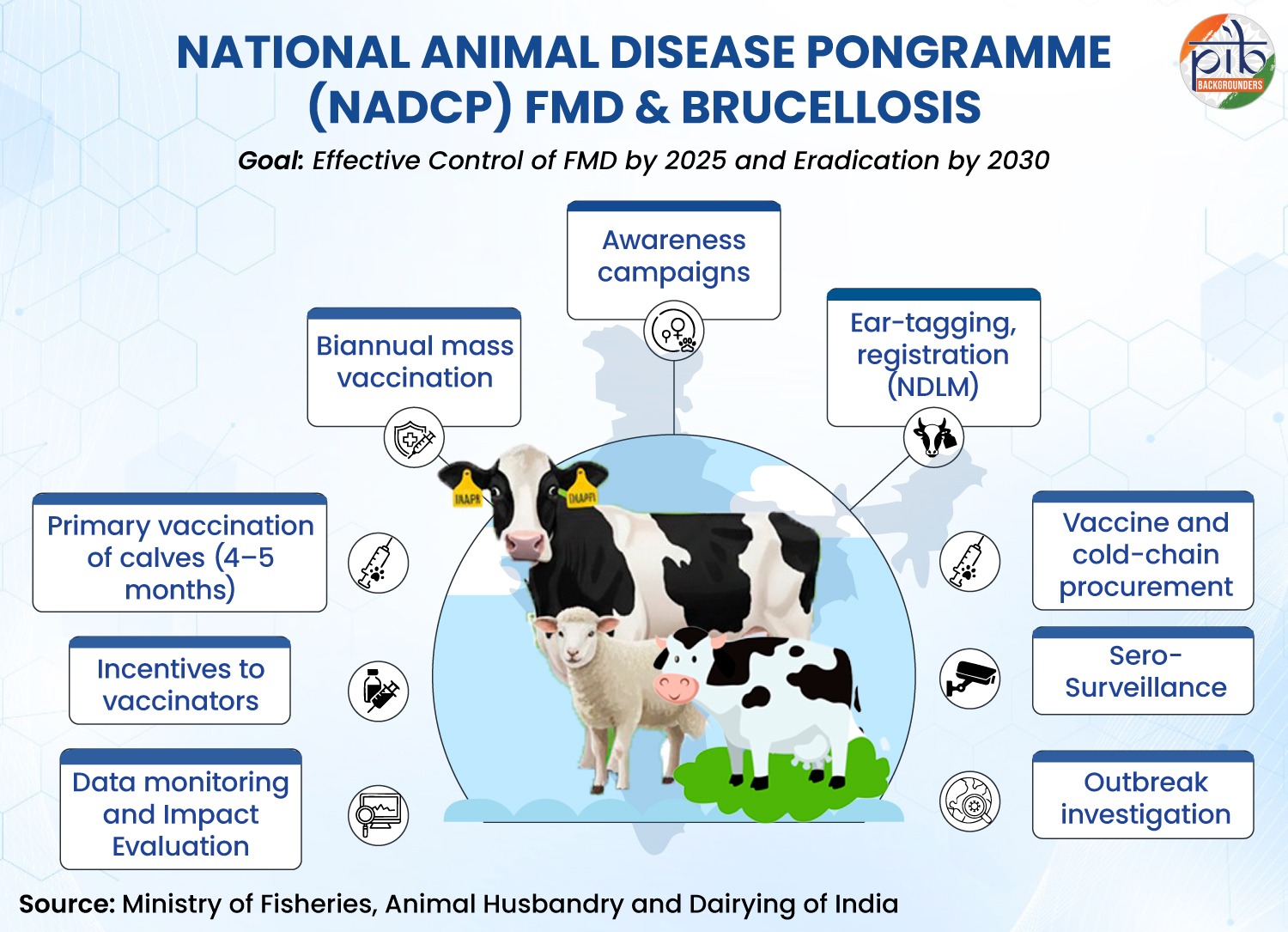
- Mass FMD vaccination of all susceptible bovines and small ruminants every six months.
- Public awareness campaigns and orientation of officials for effective programme implementation.
- Ear-tagging, registration, and uploading of animal data on the Bharat Pashudhan Portal (NDLM).
- Sero-surveillance and monitoring through pre- and post-vaccination sample testing.
- Procurement of vaccines and cold-chain equipment to ensure quality delivery.
- Outbreak investigation, virus isolation and typing, and regulation of animal movement through quarantine and check-posts.
- Continuous data generation, monitoring, and impact evaluation.
- Remuneration to vaccinators, with a minimum of ₹3 per vaccination dose.
Sero-surveillance & Sero-monitoring
Sero-surveillance involves population-level assessment of antibody prevalence to estimate disease exposure and immunity, sero-monitoring focuses on longitudinal tracking of antibody levels to understand immunity.
Financial Commitment to Livestock Health and Disease Control
Building on the success of NADCP, the Government has integrated disease control, veterinary services and animal healthcare under the Livestock Health and Disease Control Programme (LHDCP), enabling a more comprehensive and sustainable animal health framework.
- Under the revised LHDCP, NADCP, the Livestock Health and Disease Control (LH&DC) component, and the Pashu Aushadhi initiative have been subsumed into a single umbrella scheme to facilitate integrated implementation and effective management of livestock health interventions.
- The total budget outlay for the Livestock Health and Disease Control Programme (LHDCP) for the financial year 2026–27 is ₹2,010 crore.
National Efforts and Outcomes in Controlling FMD and Brucellosis
The scale of interventions undertaken and the measurable outcomes achieved under the National Animal Disease Control Programme (NADCP) through sustained vaccination, surveillance, and monitoring efforts across the country are as follows:
Foot and Mouth Disease (FMD)
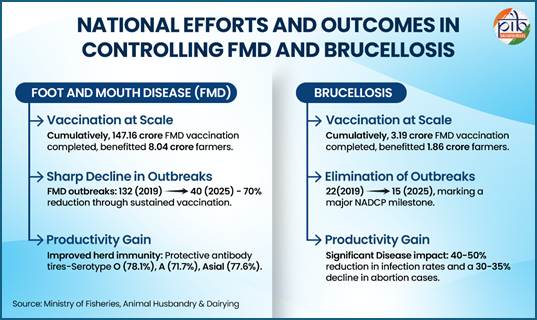
Cumulative FMD vaccination under the NADCP reached 147.16 crore FMD vaccine doses, benefiting 8.04 crore farmers.
- Reducing FMD Risk in Migratory Animal Population
- Since 2024, FMD vaccination has been extended to pastoral sheep and goats.
- The programme covers migratory populations in Haryana, Himachal Pradesh, Uttarakhand, and the Union Territories of Jammu & Kashmir and Ladakh to prevent the spread of disease along migratory routes.
Improved Immunity and Decline in Disease Outbreaks
- FMD type O: The most common and widespread serotype in India and many parts of the world. It causes frequent outbreaks.
- FMD type A: A highly variable serotype, meaning it changes easily and needs well-matched vaccines.
- FMD type Asia1-A serotype mainly found in South Asia, including India, but less widespread than type O
Sero-monitoring conducted to assess post-vaccination antibody response indicates that the average protective immunity against Foot and Mouth Disease (FMD) virus serotypes O, A, and Asia1 stands at 78.1%, 71.7%, and 77.6%, respectively. These levels indicate strong herd immunity. The improved immunity has led to a sharp decline in disease incidence.
- The reported FMD outbreaks fell from 132 in 2019 to just 40 cases by 2025. This reflects the effectiveness of nationwide vaccination coverage.
Brucellosis
Under the NADCP, female bovine calves aged 4-8 months receive a one-time Brucellosis vaccination in their lifetime.
Improved Immunity and Decline in Disease Outbreaks
- In 2025, post-vaccination monitoring shows seroconversion rates (percentage of vaccinated animals that develop antibodies) of 75.63 % in cattle calves and 67.17 % in buffalo calves.
- The findings indicate effective immunity, which has contributed to a sharp decline in Brucellosis cases.
- The incidence of reported outbreaks reduced from 22 in 2019 to 15 in 2025, demonstrating the positive impact of the programme's interventions.
- Veterinary facilities and Mobile Veterinary Units (MVUs) are being strengthened to ensure last-mile animal healthcare. A total of 4,019 MVUs are operational across 29 States and UTs. They provide doorstep veterinary services through the toll-free number 1962. So far, the initiative has benefited 136 lakh farmers and treated 276 lakh animals.
- The Bharat Pashudhan Portal integrates livestock registration, FMD, and Brucellosis vaccination data, with each animal assigned a unique 12-digit Tag ID. By July 2026, over 39.00 crore livestock had been registered on the portal. This has enabled real-time monitoring, improved traceability, and a more transparent, data-driven implementation of livestock development programmes.
- AI-enabled analytics, vaccination traceability, real-time dashboards and evidence-based planning can further strengthen disease surveillance and resource allocation in future.
- Farmer outreach is strengthened through Multi-Purpose Artificial Insemination Technicians in Rural India (MAITRIs), who provide doorstep veterinary services. So far, 39,810 technicians have been trained with financial support.
National One Health Mission
The One Health approach recognizes the intrinsic interdependence of human, animal, and environmental health. By strengthening the early detection, surveillance, and control of animal diseases, the National Animal Disease Control Programme (NADCP) contributes to reducing the risk of zoonotic disease transmission, promotes the prudent use of antimicrobials, and enhances India's preparedness and resilience against emerging and future public health threats, including pandemics.
The Prime Minister's Science, Technology, and Innovation Advisory Council (PM-STIAC) in its 21st meeting held on 7th July, 2022, approved setting up a National One Health Mission with a cross-ministerial effort, which will serve to coordinate, support, and integrate all the existing One Health activities in the country and fill gaps where it is appropriate.
NDDB’s brucellosis control model reinforces this by stressing the importance of vaccination, safe waste disposal, strong biosecurity, public awareness, and coordination between departments, especially since human brucellosis often goes undetected.
One Health ultimately offers a practical, holistic approach to protecting people, animals, and ecosystems amid rising disease threats and rapid environmental change.
Strengthening Animal Health Security for Pandemic Preparedness: Pandemic Fund Project
In 2024, the Government launched the Pandemic Fund Project on "Animal Health Security Strengthening in India for Pandemic Preparedness and Response." It is a US$25 million initiative supported by the G20 Pandemic Fund. The project is implemented in partnership with the Asian Development Bank (ADB), the Food and Agriculture Organization (FAO), and the World Bank.
The project complements the NADCP by strengthening animal health systems to improve pandemic preparedness. It enhances disease surveillance, including genomic and environmental surveillance. It also upgrades laboratory infrastructure and promotes cross-border collaboration. These measures improve early detection and timely response to zoonotic and transboundary animal diseases.
As part of the initiative, the Government released two important documents aimed at strengthening animal health management in India:
- Standard Veterinary Treatment Guidelines (SVTG): A comprehensive framework that promotes scientific veterinary practices, rational use of medicines, and antimicrobial stewardship. It also supports the National Action Plan on Antimicrobial Resistance.
- Crisis Management Plan (CMP) for Animal Diseases: A national framework to strengthen preparedness and guide rapid response during disease outbreaks. It supports timely containment and effective recovery measures.
Infographics on National Animal Disease Control Programme (NADCP)

NABARD Grade A | ARD Answer Writing Practice
Q. Livestock is an important pillar of India’s rural economy and a major source of livelihood diversification for farmers. Discuss the significance of the livestock sector for rural development. How do animal diseases affect farmers and the livestock economy? Examine the role of initiatives such as the National Animal Disease Control Programme (NADCP) and the One Health approach in strengthening animal health and improving farmers’ livelihoods.
(15 Marks | 600 Words)
The livestock sector is an integral part of India’s rural economy, particularly for small and marginal farmers who depend on animals for income, employment, nutrition and livelihood security. Dairy, poultry, sheep, goat and other livestock activities provide regular income and diversify farm income beyond crop cultivation. However, animal diseases can reduce productivity, cause mortality, affect reproduction and restrict livestock trade. Therefore, strengthening animal health is essential for improving farmer incomes and building a resilient rural economy.
I. Significance of the Livestock Sector for Rural Economy
- Livelihood and Income: Livestock provides an important supplementary and regular source of income to farming households, reducing dependence on seasonal crop income.
- Employment Generation: Dairy, poultry, sheep, goat rearing and allied activities generate employment across production, processing, transportation and marketing.
- Risk Diversification: Livestock acts as a buffer during crop failures, droughts and other agricultural shocks by providing an alternative source of income.
- Nutrition Security: Milk, eggs and meat contribute to household nutrition by providing high-quality protein and other essential nutrients.
- Women Empowerment: Livestock activities can provide opportunities for women to participate in income-generating activities and household-level enterprises.
- Rural Entrepreneurship: Dairy cooperatives, producer organisations, processing units and livestock-based enterprises promote value addition and strengthen rural markets.
II. Impact of Animal Diseases on Farmers and Livestock Economy
Animal diseases have significant economic and social consequences:
- Reduction in productivity: Diseases can reduce milk, meat and egg production and affect animal growth.
- Reproductive losses: Diseases affecting reproduction can reduce fertility, cause abortions and lower herd productivity.
- Animal mortality: Severe diseases can directly cause the death of productive animals, resulting in substantial capital losses for farmers.
- Higher costs: Farmers may incur additional expenditure on treatment, veterinary services and disease management.
- Loss of income: Lower productivity and mortality can adversely affect household income and repayment capacity.
- Trade restrictions: Animal diseases can restrict movement and trade of livestock and livestock products.
- Food and public health risks: Certain diseases are zoonotic and can affect human health, highlighting the need for coordinated disease management.
III. Role of NADCP in Strengthening Animal Health
The National Animal Disease Control Programme (NADCP) focuses on controlling and ultimately eliminating major livestock diseases, particularly Foot and Mouth Disease (FMD) and brucellosis.
Its major interventions include:
- Biannual mass vaccination of susceptible livestock.
- Primary vaccination of calves at 4–5 months.
- Ear-tagging and registration under the National Digital Livestock Mission framework.
- Sero-surveillance and monitoring to assess disease exposure and immunity.
- Vaccine and cold-chain procurement to ensure effective vaccination.
- Outbreak investigation, virus isolation and typing, along with quarantine and post-outbreak measures.
- Awareness campaigns and incentives to strengthen participation in vaccination.
- Data monitoring and impact evaluation for evidence-based disease control.
The programme has contributed to a decline in FMD outbreaks and improved disease control, thereby protecting livestock productivity and farmer incomes.
IV. One Health Approach and Rural Livelihood Security
Animal health cannot be separated from human and environmental health. The One Health approach promotes coordination between:
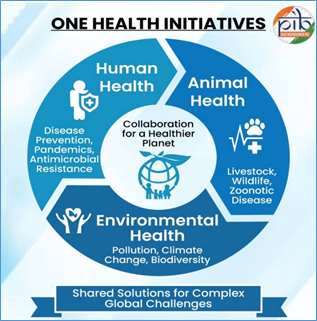
- Human Health: Disease prevention, pandemics and antimicrobial resistance.
- Animal Health: Livestock, wildlife and zoonotic diseases.
- Environmental Health: Pollution, climate change and biodiversity.
Such coordination enables early detection of zoonotic diseases, improves surveillance, strengthens preparedness and promotes integrated solutions to complex health challenges.
In conclusion, a healthy livestock population is essential for strengthening rural livelihoods, diversifying farm incomes and improving nutritional and economic security. Animal diseases can undermine these gains through productivity losses, mortality, higher costs and trade restrictions. Programmes such as NADCP, supported by vaccination, surveillance and digital livestock management, can protect farmers from these risks. Integrating such efforts with the One Health approach can further strengthen disease preparedness by connecting human, animal and environmental health. Thus, investment in animal health should be viewed not merely as veterinary intervention but as an important component of rural development, farmer income security and a resilient rural economy.
NABARD Grade A (Phase II) — Mains Level MCQ Set
Topic: National Animal Disease Control Programme (NADCP)
Q1. Consider the following statements regarding the design and vaccination protocol of the National Animal Disease Control Programme:
I. The programme was launched in September 2019 to control and eradicate Foot and Mouth Disease and Brucellosis through nationwide vaccination.
II. It targets 100 per cent vaccination of all livestock against FMD twice a year, that is at six-monthly intervals.
III. Brucellosis vaccination under the programme is administered once in the lifetime of female bovine calves aged 4 to 8 months.
IV. Remuneration to vaccinators is provided at a minimum of ₹3 per vaccination dose.
Which of the statements given above are correct?
A) I, II and III only
B) II, III and IV only
C) I, III and IV only
D) I and II only
E) I, II, III and IV
Correct Answer: E
Explanation:
All four statements are correct, making E the answer.
Statement I is correct. NADCP was launched in September 2019 with the twin objectives of controlling and eradicating FMD and Brucellosis, and it ranks among India's largest livestock health initiatives.
Statement II is correct. The FMD protocol is biannual mass vaccination of all susceptible bovines and small ruminants every six months. The six-monthly cycle is dictated by the duration of vaccine-induced immunity against FMD, which wanes well within a year, so an annual schedule would leave a substantial immunity gap in the herd.
Statement III is correct. Brucellosis vaccination is a one-time lifetime intervention confined to female bovine calves aged 4 to 8 months. Three elements of this protocol must be held together: it is once only, it is restricted to females, and it is restricted to a narrow age window. The restriction to females follows from the fact that Brucellosis is a reproductive disease affecting the reproductive organs, fertility and lactation, and the narrow age window ensures vaccination before the animal attains breeding age.
Statement IV is correct. Vaccinators receive a minimum of ₹3 per vaccination dose, an incentive designed to sustain last-mile delivery in a campaign of this scale.
A note of caution for aspirants: the graphic accompanying the programme refers to primary vaccination of calves at 4 to 5 months, whereas the Brucellosis protocol text specifies the 4 to 8 month window. In an examination, the 4 to 8 month range is the safer answer for Brucellosis vaccination of female bovine calves.
Q2. Case Study: A District Animal Husbandry Officer is preparing the NADCP vaccination roster for his district for the coming year. His register records the following animals:
- Animal P: a female cattle calf aged 6 months, not previously vaccinated against Brucellosis
- Animal Q: a male buffalo calf aged 6 months
- Animal R: a female buffalo calf aged 11 months, not previously vaccinated against Brucellosis
- Animal S: a female cattle calf aged 5 months that received Brucellosis vaccination two months earlier
- Animal T: a flock of pastoral sheep migrating through Himachal Pradesh
Which of the following correctly identifies the animals eligible for Brucellosis vaccination under NADCP during the current year?
A) P and R only
B) P, Q and S only
C) P only
D) P, R and S only
E) P and S only
Correct Answer: C
Explanation:
Each animal must be tested against the three cumulative conditions of the Brucellosis protocol: the animal must be female, must be a bovine calf aged 4 to 8 months, and must not have been vaccinated earlier, since the vaccination is one-time in the lifetime.
Animal P is a female cattle calf aged 6 months and previously unvaccinated. It satisfies all three conditions and is eligible.
Animal Q fails on sex. It is a male buffalo calf, and the protocol covers female bovine calves only, because the disease burden being targeted is reproductive, affecting fertility, lactation and consequently milk and meat production.
Animal R fails on age. At 11 months it has passed beyond the 4 to 8 month window, and the protocol does not provide for catch-up vaccination outside that window.
Animal S fails on the one-time condition. It has already received the lifetime dose, and repeat vaccination is not part of the protocol. Note the contrast with FMD, where repeat vaccination every six months is precisely the design.
Animal T is outside the Brucellosis protocol altogether, since sheep are not bovines. Pastoral sheep and goats have been covered under FMD vaccination since 2024 in Haryana, Himachal Pradesh, Uttarakhand and the Union Territories of Jammu and Kashmir and Ladakh, to prevent disease spread along migratory routes. Candidates who confuse the two disease protocols will wrongly admit Animal T.
Only Animal P qualifies, making C the answer.
Q3. Consider the following statements about Foot and Mouth Disease and Brucellosis as described under NADCP:
I. FMD is a highly contagious viral disease affecting cloven-hoofed animals including cattle, buffalo, sheep, goats and pigs, and it reduces milk production, slows growth, affects reproductive performance and lowers the working capacity of draft animals.
II. Brucellosis in cattle and buffaloes is caused by the bacterium Brucella abortus, and since there is no curative treatment for bovines, vaccination is the most effective and sustainable control measure.
III. Among the FMD serotypes, type A is described as the most common and widespread in India and many parts of the world, while type O is a highly variable serotype requiring well-matched vaccines.
IV. Serotype Asia1 is mainly found in South Asia, including India, but is less widespread than the most common serotype.
Which of the statements given above are correct?
A) I, II and IV only
B) I, III and IV only
C) II, III and IV only
D) I and II only
E) I, II, III and IV
Correct Answer: A
Explanation:
Statement I is correct. FMD is viral and highly contagious, its host range is confined to cloven-hoofed animals, and its economic damage operates through four channels: reduced milk yield, retarded growth, impaired reproduction and reduced draught capacity. It additionally limits access to international markets, which is why FMD freedom carries trade significance beyond the domestic herd.
Statement II is correct. Brucellosis is bacterial, caused by Brucella abortus, and the absence of any curative treatment for bovines is the decisive fact: where treatment is unavailable, prophylaxis through vaccination becomes the only sustainable control strategy. This contrast between a viral disease managed by repeat vaccination and a bacterial disease managed by one-time vaccination is a favoured examination point.
Statement III is incorrect because it reverses the two serotypes. Type O is the most common and widespread serotype in India and in many parts of the world, causing frequent outbreaks. Type A is the highly variable serotype that changes easily and therefore requires well-matched vaccines. Antigenic variability in type A is what makes vaccine strain selection an ongoing scientific task rather than a settled one.
Statement IV is correct. Asia1 is largely confined to South Asia and is less widespread than type O. It is also the serotype in respect of which no outbreak has been reported in the country for the last three years, which is a significant marker of progress towards FMD control.
Hence I, II and IV are correct, making A the answer.
Q4. Case Study: The Ministry of Fisheries, Animal Husbandry and Dairying reviews the following outcome indicators under NADCP:
- FMD outbreaks: 132 in 2019, declining to 40 by 2025
- Brucellosis outbreaks: 22 in 2019, declining to 15 in 2025
- NSP antibody prevalence: 20.8 per cent in 2019, declining to 8.1 per cent in 2025
Consider the following statements based on these figures:
I. The percentage reduction in FMD outbreaks between 2019 and 2025 is more than twice the percentage reduction in Brucellosis outbreaks over the same period.
II. The reduction in FMD outbreaks over the period is approximately 70 per cent.
III. NSP antibody prevalence in 2025 is less than half of its 2019 level.
Which of the statements given above are correct?
A) I and II only
B) II and III only
C) I and III only
D) I, II and III
E) III only
Correct Answer: D
Explanation:
All three statements are correct, making D the answer.
Statement I is correct and requires two percentage computations. FMD outbreaks fell from 132 to 40, a reduction of 92, which as a proportion of 132 is approximately 69.7 per cent. Brucellosis outbreaks fell from 22 to 15, a reduction of 7, which as a proportion of 22 is approximately 31.8 per cent. Since 69.7 is more than twice 31.8 (which would require exceeding 63.6), the statement holds. The comparison is analytically meaningful: FMD is addressed through repeated biannual vaccination of the entire susceptible population, whereas Brucellosis relies on a single lifetime dose administered to a narrow cohort, so the slower decline in Brucellosis is a predictable consequence of protocol design rather than an implementation failure.
Statement II is correct. The FMD reduction of about 69.7 per cent is reported as a 70 per cent reduction achieved through sustained vaccination.
Statement III is correct. NSP (non-structural protein) antibody prevalence declined from 20.8 per cent to 8.1 per cent. Half of 20.8 is 10.4, and 8.1 is below that figure. The significance of the NSP indicator deserves emphasis in a descriptive answer: NSP antibodies indicate exposure to the live virus rather than to the vaccine, so a falling NSP prevalence is direct evidence of reduced viral circulation in the field, and it is a more rigorous measure of programme impact than outbreak counts alone, which depend on reporting intensity.
Q5. With reference to the outcome indicators under NADCP, which one of the following statements is not correct?
A) Cumulative FMD vaccination has reached 147.16 crore doses, benefiting 8.04 crore farmers, while cumulative Brucellosis vaccination stands at 3.19 crore doses, benefiting 1.86 crore farmers.
B) Sero-monitoring of post-vaccination antibody response shows average protective immunity of 78.1 per cent against serotype O, 71.7 per cent against serotype A and 77.6 per cent against serotype Asia1.
C) Post-vaccination monitoring in 2025 records seroconversion rates of 75.63 per cent in cattle calves and 67.17 per cent in buffalo calves against Brucellosis.
D) Sero-surveillance refers to longitudinal tracking of antibody levels in identified individual animals, whereas sero-monitoring refers to a one-time population-level estimate of antibody prevalence.
E) Brucellosis control has been associated with a 40 to 50 per cent reduction in infection rates and a 30 to 35 per cent decline in abortion cases.
Correct Answer: D
Explanation:
Option D is the incorrect statement and is therefore the answer, because it reverses the two definitions. Sero-surveillance involves population-level assessment of antibody prevalence to estimate disease exposure and immunity. Sero-monitoring focuses on longitudinal tracking of antibody levels to understand immunity. The distinction matters operationally: sero-surveillance answers the question of how much virus is circulating in the population, while sero-monitoring answers the question of whether the vaccine is producing and sustaining an adequate antibody response in vaccinated animals. NADCP uses both, through pre-vaccination and post-vaccination sample testing.
Option A is correct on all four figures. Note the contrast in scale between the two diseases: 147.16 crore FMD doses against 3.19 crore Brucellosis doses, which follows directly from repeat biannual vaccination of the whole susceptible population versus a single lifetime dose to female bovine calves only.
Option B is correct. Protective antibody titres of 78.1 per cent for serotype O, 71.7 per cent for A and 77.6 per cent for Asia1 indicate strong herd immunity. The lowest figure being for serotype A is consistent with its high antigenic variability.
Option C is correct. Seroconversion, meaning the percentage of vaccinated animals that develop antibodies, stood at 75.63 per cent in cattle calves and 67.17 per cent in buffalo calves in 2025.
Option E is correct. The Brucellosis intervention has been associated with a 40 to 50 per cent reduction in infection rates and a 30 to 35 per cent decline in abortion cases, the latter being the clinical manifestation most directly linked to farmer income loss.
Q6. Consider the following statements regarding the institutional restructuring and financing of livestock health interventions:
I. Under the revised Livestock Health and Disease Control Programme, NADCP, the Livestock Health and Disease Control component and the Pashu Aushadhi initiative have been subsumed into a single umbrella scheme.
II. The total budget outlay for the Livestock Health and Disease Control Programme for the financial year 2026-27 is ₹2,010 crore.
III. Financial assistance for establishing veterinary vaccine and drug manufacturing facilities by individual entrepreneurs and private companies is provided through the Animal Husbandry Infrastructure Development Fund.
IV. Financial support is extended to key ICAR institutions covering vaccine research, quality testing, surveillance, sero-surveillance, disease modelling and state-wise sampling.
Which of the statements given above are correct?
A) I, II and III only
B) II, III and IV only
C) I, III and IV only
D) I, II and IV only
E) I, II, III and IV
Correct Answer: E
Explanation:
All four statements are correct, making E the answer.
Statement I is correct. The consolidation of NADCP, the LH&DC component and the Pashu Aushadhi initiative into a single umbrella scheme mirrors a wider administrative pattern in Indian agriculture schemes, where fragmented programmes are merged to enable integrated implementation and effective management. The rationale is that vaccination, veterinary service delivery and access to affordable animal medicines are complementary rather than separable interventions.
Statement II is correct. The LHDCP outlay for FY 2026-27 stands at ₹2,010 crore.
Statement III is correct. The Animal Husbandry Infrastructure Development Fund is the vehicle through which individual entrepreneurs, private companies and other eligible entities receive assistance for setting up veterinary vaccine and drug manufacturing facilities. This addresses the supply side of a programme whose scale, running to over 147 crore doses, cannot be sustained on public-sector manufacturing capacity alone. States and Union Territories separately receive assistance for procuring vaccination accessories and strengthening cold-chain infrastructure.
Statement IV is correct. ICAR institutions receive support across the full research and surveillance chain, from vaccine research and quality testing through to disease modelling and state-wise sampling, which is what makes the programme science-based rather than merely operational.
Q7. Consider the following statements about digital and service-delivery infrastructure supporting NADCP:
I. The Bharat Pashudhan Portal integrates livestock registration with FMD and Brucellosis vaccination data, assigning each animal a unique 12-digit Tag ID, and had over 39.00 crore livestock registered by July 2026.
II. A total of 4,019 Mobile Veterinary Units are operational across 29 States and Union Territories, providing doorstep services through the toll-free number 1962, having benefited 136 lakh farmers and treated 276 lakh animals.
III. On average, each Mobile Veterinary Unit has treated more than 6,000 animals.
IV. Farmer outreach is strengthened through Multi-Purpose Artificial Insemination Technicians in Rural India (MAITRIs), of whom 39,810 have been trained with financial support.
Which of the statements given above are correct?
A) I, II and IV only
B) II, III and IV only
C) I, III and IV only
D) I, II, III and IV
E) I and II only
Correct Answer: D
Explanation:
All four statements are correct, making D the answer.
Statement I is correct. The Bharat Pashudhan Portal, operating under the National Digital Livestock Mission, links each animal to a unique 12-digit Tag ID and consolidates registration and vaccination records, enabling real-time monitoring, traceability and data-driven implementation. Registration crossed 39.00 crore livestock by July 2026. Set against the total livestock population of 535.78 million recorded in the 20th Livestock Census 2019, this represents coverage of roughly 73 per cent of the national herd.
Statement II is correct on the count of units, the geographical spread, the helpline number and the outreach figures.
Statement III is correct and requires a division. Dividing 276 lakh animals treated by 4,019 Mobile Veterinary Units gives approximately 6,867 animals per unit, which exceeds 6,000. A parallel computation shows about 3,384 farmers served per unit. These per-unit figures are useful in a descriptive answer, since they indicate the caseload intensity that last-mile veterinary delivery is absorbing.
Statement IV is correct. MAITRIs deliver doorstep veterinary and artificial insemination services, with 39,810 technicians trained with financial support, and they form the human interface complementing the digital and mobile infrastructure.
Q8. Case Study: A policy analyst examining bovine productivity data over the decade from 2014-15 to 2024-25 records the following:
- Indigenous and non-descript cattle: 927 kg per animal per year rising to 1,343.2 kg
- Buffalo: 1,880 kg per animal per year rising to 2,365.2 kg
- Average bovine productivity: 1,640 kg per animal per year rising to 2,250 kg
- Milk production: 146.31 million tonnes rising to 247.87 million tonnes
Consider the following statements based on this data:
I. The percentage increase in the productivity of indigenous and non-descript cattle over the decade exceeds that of buffalo by more than 15 percentage points.
II. The percentage increase in India's milk production over the decade exceeds the percentage increase in average bovine productivity, indicating that expansion in the productive animal base also contributed to output growth.
III. To achieve the stated target of 3,000 kg per animal per year by 2030, average bovine productivity would need to rise by a further one-third or more from its 2024-25 level.
Which of the statements given above are correct?
A) I and II only
B) II and III only
C) I and III only
D) I, II and III
E) I only
Correct Answer: D
Explanation:
All three statements are correct, making D the answer.
Statement I is correct. Indigenous and non-descript cattle productivity rose by 44.89 per cent, while buffalo productivity rose by 25.80 per cent. The difference is 19.09 percentage points, which exceeds 15. The sharper gain in indigenous and non-descript cattle is attributable to their much lower starting base, which leaves greater headroom for improvement through disease control, breed improvement and feeding practices.
Statement II is correct and is the most analytically valuable inference in the set. Milk production rose by 69.4 per cent while average bovine productivity rose by 36.63 per cent. Since total output equals productivity multiplied by the number of productive animals, output growth substantially exceeding per-animal productivity growth implies that the in-milk animal base also expanded over the decade. Attributing the entire milk production increase to productivity gains alone would be an error, and candidates should be prepared to make this decomposition explicitly.
Statement III is correct. Moving from 2,250 kg to 3,000 kg requires an additional 750 kg, which as a proportion of 2,250 is exactly 33.33 per cent, that is one-third. Note that the average bovine productivity gain of 36.63 per cent is described as the highest productivity gain recorded by any country globally, so the 2030 target implies sustaining a comparable rate of improvement over a shorter horizon.
Q9. With reference to the One Health approach and the Pandemic Fund Project as they relate to NADCP, which one of the following statements is not correct?
A) The One Health approach recognises the interdependence of human, animal and environmental health, and NADCP contributes to it by strengthening early detection, surveillance and control of animal diseases.
B) The Prime Minister's Science, Technology and Innovation Advisory Council approved setting up a National One Health Mission as a cross-ministerial effort at its 21st meeting held on 07 July 2022.
C) The Pandemic Fund Project on Animal Health Security Strengthening in India for Pandemic Preparedness and Response was launched in 2024 as a US$25 million initiative supported by the G20 Pandemic Fund.
D) The Pandemic Fund Project is implemented in partnership with the Asian Development Bank, the Food and Agriculture Organization and the World Bank, and it enhances genomic and environmental surveillance.
E) The Standard Veterinary Treatment Guidelines constitute a national framework to guide rapid response during disease outbreaks, while the Crisis Management Plan promotes rational use of medicines and antimicrobial stewardship.
Correct Answer: E
Explanation:
Option E is the incorrect statement and is therefore the answer, because it swaps the functions of the two documents. The Standard Veterinary Treatment Guidelines (SVTG) constitute a comprehensive framework promoting scientific veterinary practices, rational use of medicines and antimicrobial stewardship, and they support the National Action Plan on Antimicrobial Resistance. The Crisis Management Plan (CMP) for Animal Diseases is the national framework for preparedness and rapid response during outbreaks, supporting timely containment and effective recovery. The functional logic is easy to anchor: treatment guidelines govern routine clinical practice, while a crisis management plan governs emergency response.
Option A is correct. NADCP's contribution to One Health runs through reduced risk of zoonotic spillover, prudent antimicrobial use and improved pandemic preparedness.
Option B is correct on the body, the meeting number and the date.
Option C is correct on the year, the amount and the funding source.
Option D is correct on the three implementing partners and on the surveillance enhancements, which extend beyond conventional disease reporting into genomic and environmental surveillance, alongside laboratory upgradation and cross-border collaboration.
A further point worth retaining: NDDB's brucellosis control model reinforces the One Health framing by stressing vaccination, safe waste disposal, strong biosecurity, public awareness and inter-departmental coordination, particularly because human brucellosis often goes undetected, which makes it a genuinely zoonotic concern rather than a purely veterinary one.
Q10. Consider the following statements regarding the livestock base and the forward priorities of NADCP:
I. As per the 20th Livestock Census 2019, India's total livestock population is 535.78 million, of which 302.79 million are bovines, meaning bovines constitute more than 55 per cent of the total livestock population.
II. Since 2024, FMD vaccination has been extended to pastoral sheep and goats covering migratory populations in Haryana, Himachal Pradesh, Uttarakhand and the Union Territories of Jammu and Kashmir and Ladakh.
III. Future priorities include progressive alignment with international standards for FMD freedom, expansion of laboratory accreditation, genomic surveillance, AI-enabled disease intelligence and climate-resilient surveillance systems.
IV. Brucellosis vaccination has been extended to pastoral sheep and goats along with FMD vaccination since 2024, since both diseases spread along migratory routes.
Which of the statements given above are correct?
A) I, II and III only
B) II, III and IV only
C) I, III and IV only
D) I and II only
E) I, II, III and IV
Correct Answer: A
Explanation:
Statement I is correct and requires a quick ratio. Dividing 302.79 million bovines by the total livestock population of 535.78 million gives approximately 56.5 per cent, which exceeds 55 per cent. The bovine share is the reason the programme's Brucellosis component, though restricted to bovines, still addresses the majority segment of the national herd.
Statement II is correct. The extension of FMD vaccination to pastoral sheep and goats from 2024 is a targeted epidemiological intervention. Migratory flocks move across State boundaries and can seed infection along transhumance routes, so vaccinating them addresses a transmission pathway that a settled-herd campaign would miss entirely. The five covered jurisdictions, namely Haryana, Himachal Pradesh, Uttarakhand, Jammu and Kashmir and Ladakh, lie along the Himalayan and sub-Himalayan migratory corridors.
Statement III is correct and lists the stated forward agenda, to which strengthened One Health coordination should also be added. Alignment with international standards for FMD freedom is the trade-relevant priority, since FMD status determines access to international livestock and livestock-product markets.
Statement IV is incorrect. The 2024 extension covers FMD vaccination only. Brucellosis vaccination under NADCP remains confined to female bovine calves aged 4 to 8 months, and sheep and goats are not bovines. The statement is plausible on its face, since both diseases are transmissible, but it conflates two protocols with entirely different host ranges and schedules.
Hence I, II and III are correct, making A the answer.
Source: PIB
